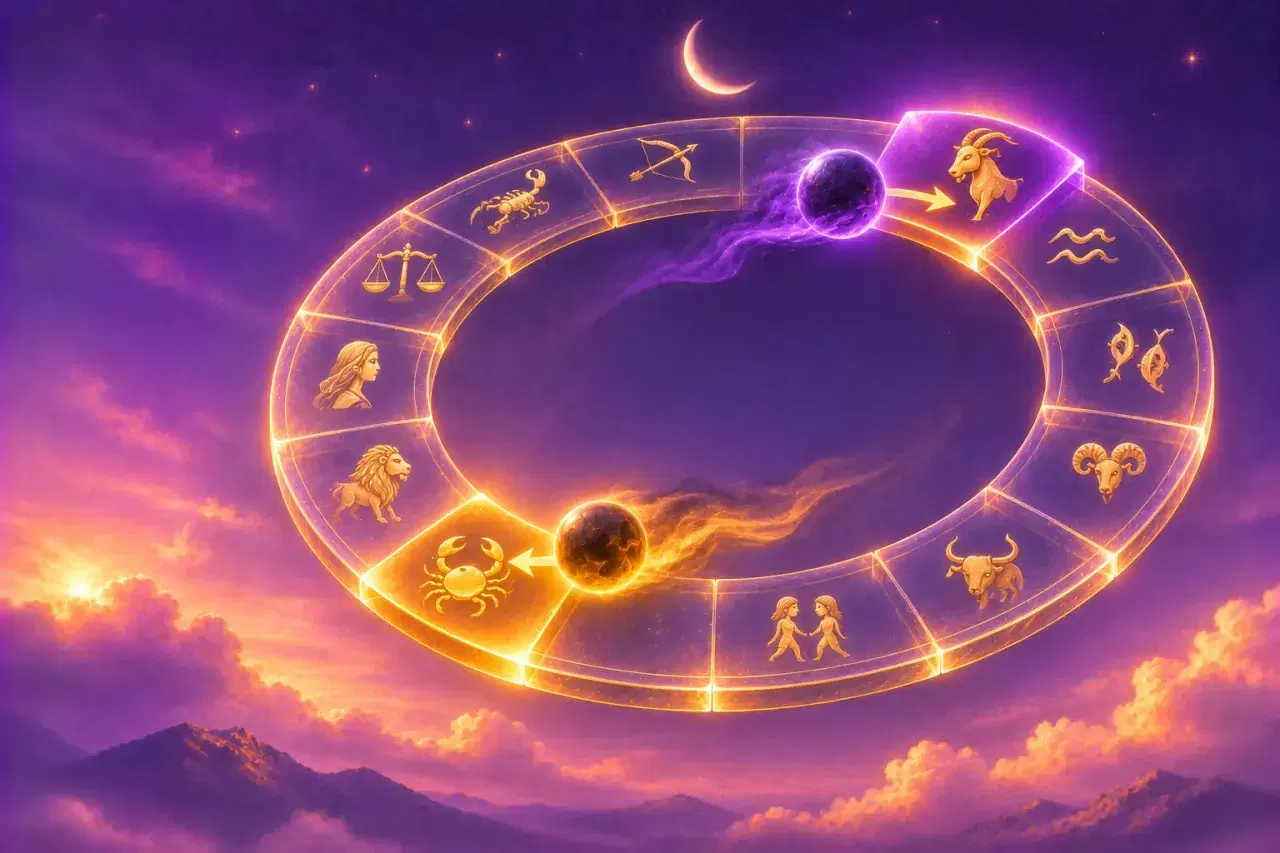
Rahu in the house of marriage worries many families, and popular websites rarely help. The traditional reading is more interesting than frightening: Rahu, the planet of crossing boundaries, brings the unfamiliar into partnership. Whether that becomes an enriching cross-cultural marriage or a confusing relationship depends on the rest of the chart and on how consciously the person chooses.
Rahu and the 7th house
The 7th house governs marriage, the spouse, business partners, contracts and the public. Rahu, the Moon's north node, signifies desire, obsession, the foreign, the unconventional and sudden change. It has no sign of its own and acts through the lord of the sign it occupies and the planets it sits with. See Rahu Mahadasha for how Rahu gives results in general.
The traditional reading
- An unconventional partner: from a different culture, community, religion, country or age group, or a relationship that breaks family expectations.
- Strong attraction: intense, sometimes sudden attraction; tradition advises taking time to know a partner well.
- Foreign links: marriage or business connected with other countries; partnerships abroad.
- Business and the public: a talent for dealing with the public, trade, media or technology, especially in partnerships.
- Watch-outs: unrealistic expectations, misunderstandings, or illusions about a partner; clear communication and honest contracts help.
Ketu in the 1st house
Rahu and Ketu are always opposite, so Rahu in the 7th means Ketu in the 1st. Ketu in the Lagna can give a detached, introspective or spiritual self-image, sometimes uncertainty about one's own identity, while Rahu pulls attention toward the partner. This axis is often read as a life lesson in balancing self and other.
How the sign changes the result
Because Rahu has no sign, its dispositor (the lord of the sign it occupies) matters greatly:
| Rahu in a sign ruled by | Traditional emphasis |
|---|---|
| Venus (Taurus, Libra) | Romantic, comfort-seeking partnerships; Rahu is often said to be strong in Taurus |
| Mercury (Gemini, Virgo) | Intellectual, communicative partners; business partnerships do well |
| Jupiter (Sagittarius, Pisces) | A partner from a different faith or philosophy; learning through partnership |
| Saturn (Capricorn, Aquarius) | Serious, sometimes older partner; partnerships tied to work or responsibility |
| Mars (Aries, Scorpio) | Intense, passionate dynamics; patience needed in conflicts |
| Sun (Leo) | Ego dynamics; a partner with status or authority |
| Moon (Cancer) | Emotional intensity; partnerships linked to home or family patterns |
Then check where that sign lord sits and how strong it is.
What else to check
- Jupiter's aspect on Rahu or the 7th house, traditionally the strongest protection.
- The 7th lord: its sign, house and strength.
- Venus, the natural significator of marriage.
- The Navamsa (D9), the main divisional chart for marriage.
- Matching: Guna Milan compares only the Moons. See 36 Guna Milan explained.
- The dasha: Rahu's Mahadasha or Antardasha, or the 7th lord's, often coincides with relationship events.
Compare a very different 7th-house planet in Saturn in the 7th house.
Timing
- Rahu's Mahadasha or Antardasha strongly activates this placement.
- Rahu's transit over your 7th house or Lagna also brings partnership themes to the fore. The current node transit is described in Rahu–Ketu transit 2026.
A calm perspective
Many people with Rahu in the 7th house have happy, lasting marriages, often with partners who broaden their world. The traditional advice is practical: get to know a partner well, keep communication honest, put agreements in writing in business, and value what is different rather than fearing it. Kundli Naksha does not sell remedies; if your family follows traditional practices such as Durga worship or Rahu mantras on Saturdays, they are devotional choices, not requirements.