Gana is the koota that most often worries families, because one of its three groups is called Rakshasa, a word that also means "demon". In matching, though, the ganas describe temperament, not morality. This guide explains the three ganas, the nakshatras in each, how Gana is scored and how much the result really matters.
What Gana measures
Gana means group or category. Each of the 27 nakshatras is placed in one of three temperament groups, and the Gana koota compares the two partners' groups to judge how naturally their temperaments fit. It is worth 6 points, the third-heaviest koota after Nadi (8) and Bhakoot (7). See 36 Guna Milan explained for all eight kootas.
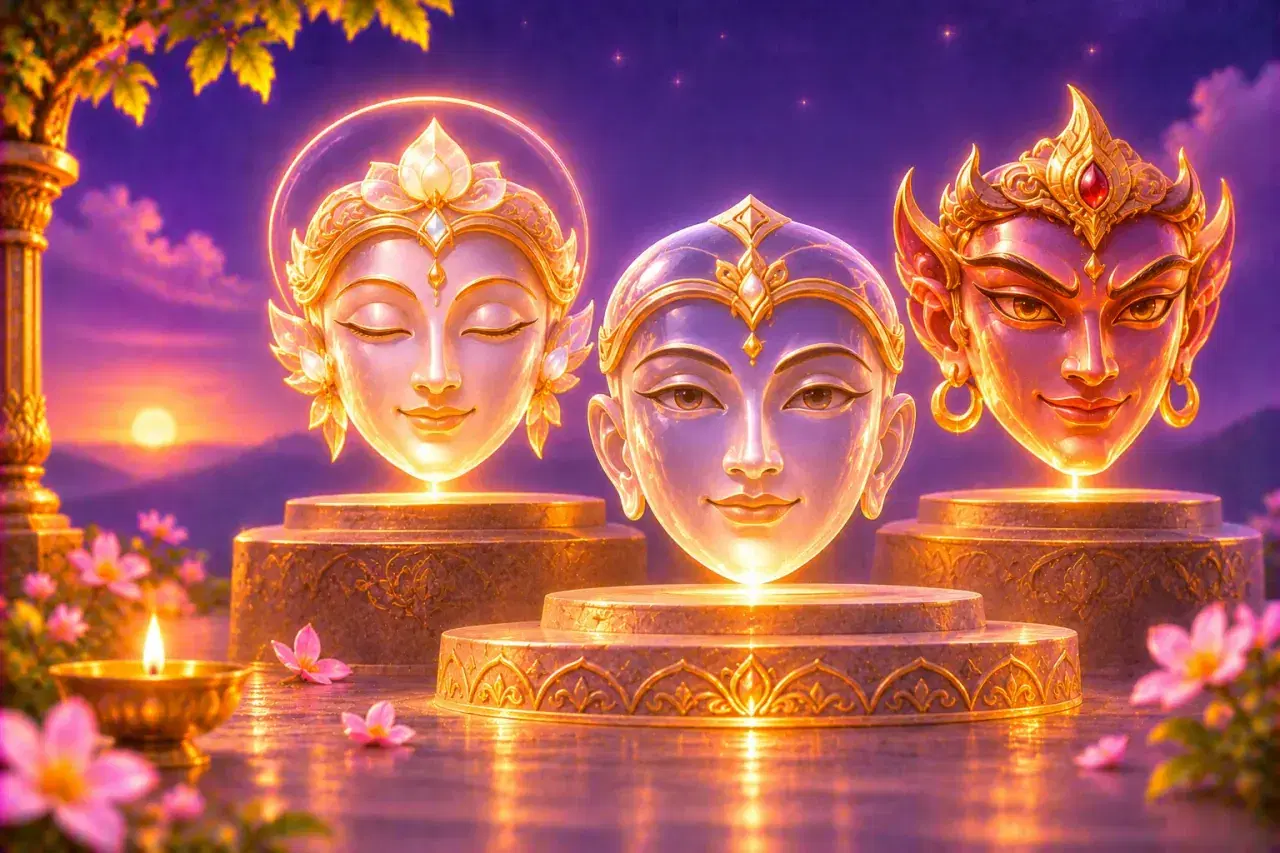
The three ganas
| Gana | Temperament traditionally described |
|---|---|
| Deva (divine) | Gentle, refined, generous, idealistic, content |
| Manushya (human) | Balanced, practical, ambitious, worldly, a mix of qualities |
| Rakshasa (demon-like) | Intense, independent, assertive, strong-willed, unconventional |
Which nakshatras belong to each gana
Nine nakshatras fall in each group:
| Deva gana | Manushya gana | Rakshasa gana |
|---|---|---|
| Ashwini | Bharani | Krittika |
| Mrigashira | Rohini | Ashlesha |
| Punarvasu | Ardra | Magha |
| Pushya | Purva Phalguni | Chitra |
| Hasta | Uttara Phalguni | Vishakha |
| Swati | Purva Ashadha | Jyeshtha |
| Anuradha | Uttara Ashadha | Mula |
| Shravana | Purva Bhadrapada | Dhanishta |
| Revati | Uttara Bhadrapada | Shatabhisha |
Find your nakshatra with the nakshatra calculator.
How Gana is scored
The traditional table, as used in most North Indian matching (rows are the groom's gana, columns the bride's):
| Groom \ Bride | Deva | Manushya | Rakshasa |
|---|---|---|---|
| Deva | 6 | 6 | 1 |
| Manushya | 5 | 6 | 0 |
| Rakshasa | 1 | 0 | 6 |
Key points:
- Same gana always scores 6, including Rakshasa with Rakshasa.
- Deva and Manushya are compatible (5 or 6).
- Rakshasa with Manushya scores 0: this is usually what reports call Gana dosha.
- Rakshasa with Deva scores 1.
Gana dosha: how worried should you be?
A zero in Gana lowers the total by up to 6 points. Traditions differ on how seriously to take it:
- Some astrologers treat Gana dosha as significant on its own, especially between Manushya and Rakshasa.
- Others consider it relaxed when the Moon-sign lords are the same or friendly (a strong Graha Maitri), or when Bhakoot and Nadi are both favourable.
- Many look at the whole match before giving it much weight.
Kundli Naksha shows the Gana score and explains it, but does not apply regional cancellations silently. Compare it with Nadi dosha and Bhakoot dosha, which carry more points.
"Rakshasa gana" is not a judgement
It is worth saying clearly: being born in a Rakshasa-gana nakshatra does not make anyone bad, harsh or unlucky. In nakshatra lore, the Rakshasa nakshatras include some of the most admired: Magha (ruled by the ancestors), Chitra (the celestial architect's star) and Jyeshtha (Indra's). The label describes intensity and independence, qualities that can be great strengths.
Gana beyond matching
The gana of a nakshatra also appears in muhurta and in nakshatra descriptions of personality. It is one part of a nakshatra's character alongside its deity, ruler, yoni and symbol; see what a nakshatra is and the Yoni koota.