After the Gayatri, the Mahamrityunjaya mantra is probably the most widely chanted Vedic verse. It is recited in temples and hospitals, at bedsides and in daily prayer, by people seeking strength, healing and freedom from fear. Its words are remarkably gentle: not a plea to escape death at any cost, but a prayer to ripen and be released, the way a ripe fruit leaves its vine.
The mantra
Devanagari
Transliteration (IAST)
Common Roman spelling: Om tryambakam yajamahe sugandhim pushtivardhanam, urvarukamiva bandhanan mrityor mukshiya mamritat.
Word-by-word meaning
| Word | Meaning |
|---|---|
| ॐ (Om) | The sacred syllable |
| त्र्यम्बकम् (tryambakam) | The three-eyed one (Shiva); also read as "father of the three worlds" or "with three mothers" |
| यजामहे (yajāmahe) | We worship, we offer to |
| सुगन्धिम् (sugandhim) | The fragrant one, whose presence is like fragrance pervading everything |
| पुष्टिवर्धनम् (puṣṭivardhanam) | The one who increases nourishment, strength and wellbeing |
| उर्वारुकम् (urvārukam) | A cucumber or melon (a ripe gourd) |
| इव (iva) | Like |
| बन्धनात् (bandhanāt) | From its bondage, from the stem that holds it |
| मृत्योः (mṛtyoḥ) | From death |
| मुक्षीय (mukṣīya) | May we be freed, released |
| मा (mā) | Not |
| अमृतात् (amṛtāt) | From immortality |
A plain translation
The image of the cucumber
The heart of the mantra is its image. A cucumber or melon ripens on the vine and, when ready, separates effortlessly, without force or pain. The prayer asks for that kind of release from the bondage of death and fear: natural, timely, ripe. And it asks not to be separated from amṛta, the deathless, the divine.
Where it comes from
- Source: Rig Veda, book 7, hymn 59, verse 12. Book 7 is attributed to the sage Vasishtha and his family.
- Also in: the Yajurveda, including the Shukla Yajurveda (Vajasaneyi Samhita 3.60) and the Krishna Yajurveda.
- Deity: Tryambaka, Rudra, later identified with Shiva.
- Other names: the Rudra mantra and the Tryambakam mantra. Some traditions also call it the mrita-sanjivani mantra, the life-restoring mantra.
The story of Markandeya
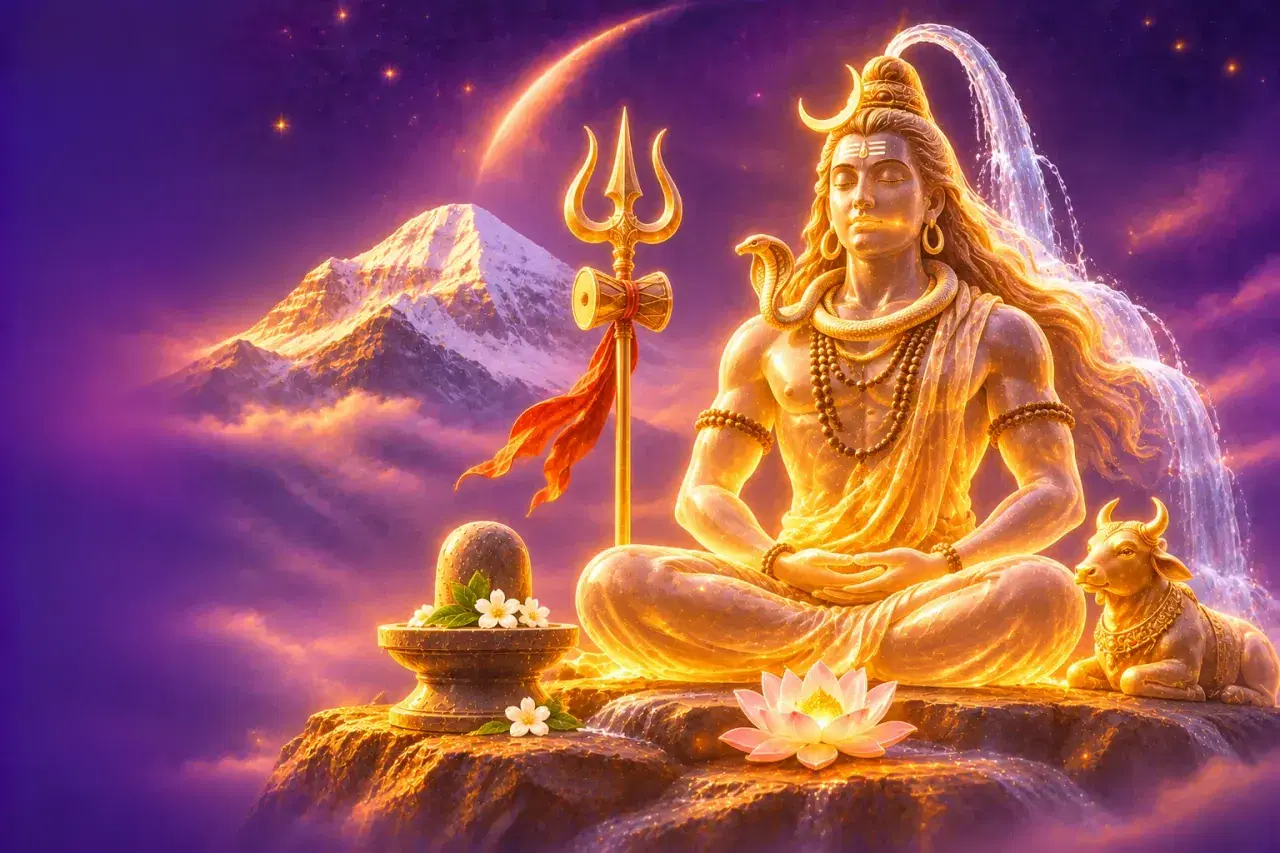
A beloved story connects the mantra with the young sage Markandeya. His parents, long childless, were granted a son by Shiva, but told he would live only sixteen years. As his sixteenth birthday came, Markandeya sat in worship of the Shiva lingam, chanting this mantra. When Yama, the lord of death, came and cast his noose, Markandeya clung to the lingam, and the noose encircled both. Shiva burst forth from the lingam, defeated Yama, and blessed Markandeya to remain sixteen forever. Shiva was then praised as Mrityunjaya, the conqueror of death, and as Kalantaka, the ender of time. The temple at Thirukadaiyur in Tamil Nadu is associated with this story.
How it is traditionally chanted
- When: at any time, but especially at dawn, at Pradosh (dusk on the 13th lunar day), on Mondays, during Shravan and on Maha Shivaratri. You can check sunrise and Pradosh times in the Panchang.
- Where: a clean, quiet place, before a Shiva lingam or image if possible, facing east or north.
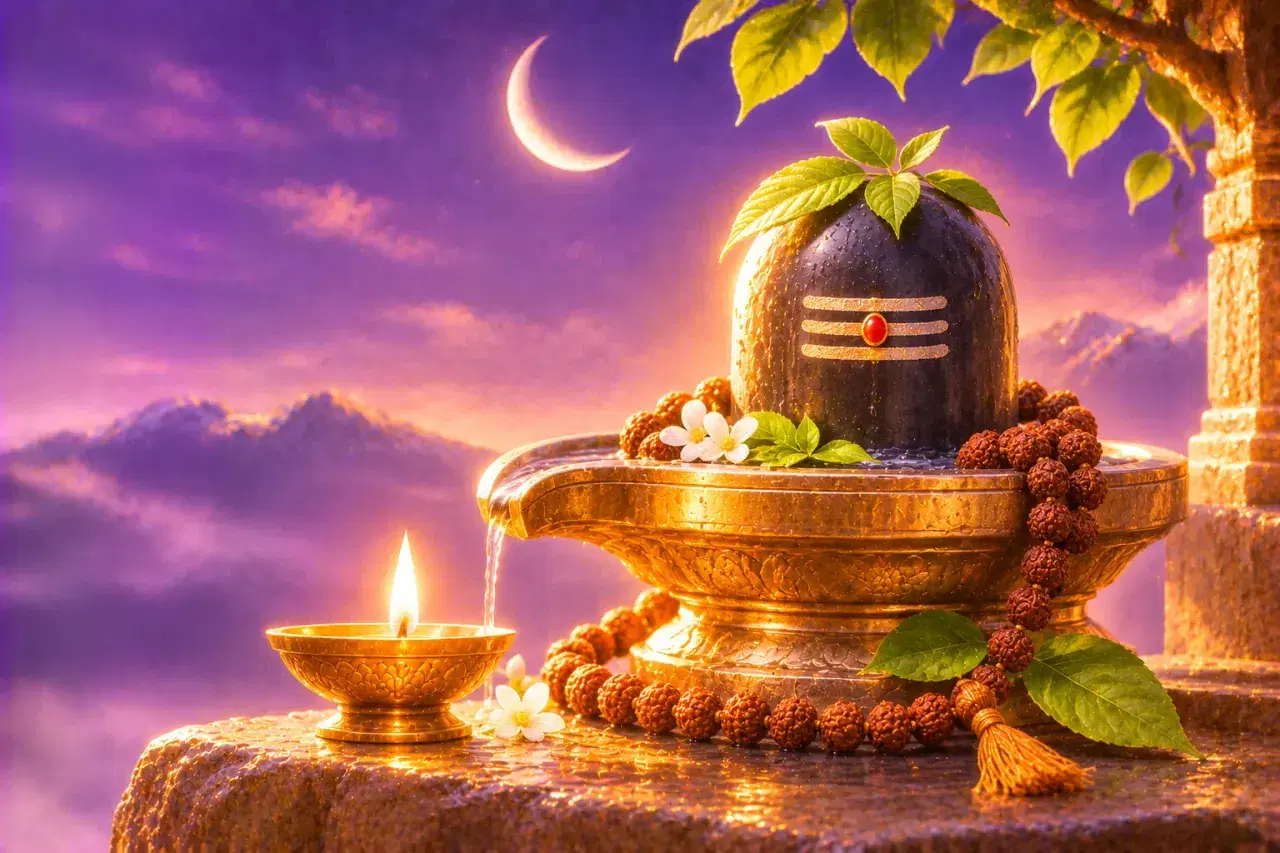
- How many times: 11, 21, 27 or 108 times is common, counted on a rudraksha mala. Families sometimes organise a collective jaap of 1.25 lakh repetitions over several days.
- How: clearly and steadily, aloud, softly or silently, keeping the meaning in mind. Offering water or bel leaves to a lingam while chanting is a common practice.
- Pronunciation: go slowly at tryambakaṃ and mukṣīya; it helps to learn from a teacher or a recording by a Vedic chanter.
What it can and cannot do
Many people chant the Mahamrityunjaya mantra during illness, for loved ones in hospital, or when afraid. Devotees find it steadying and consoling, and calm, focused repetition can help many people feel more at peace. It is a spiritual practice, not a medical treatment: please follow your doctor's advice and use the mantra alongside it, never instead of it.