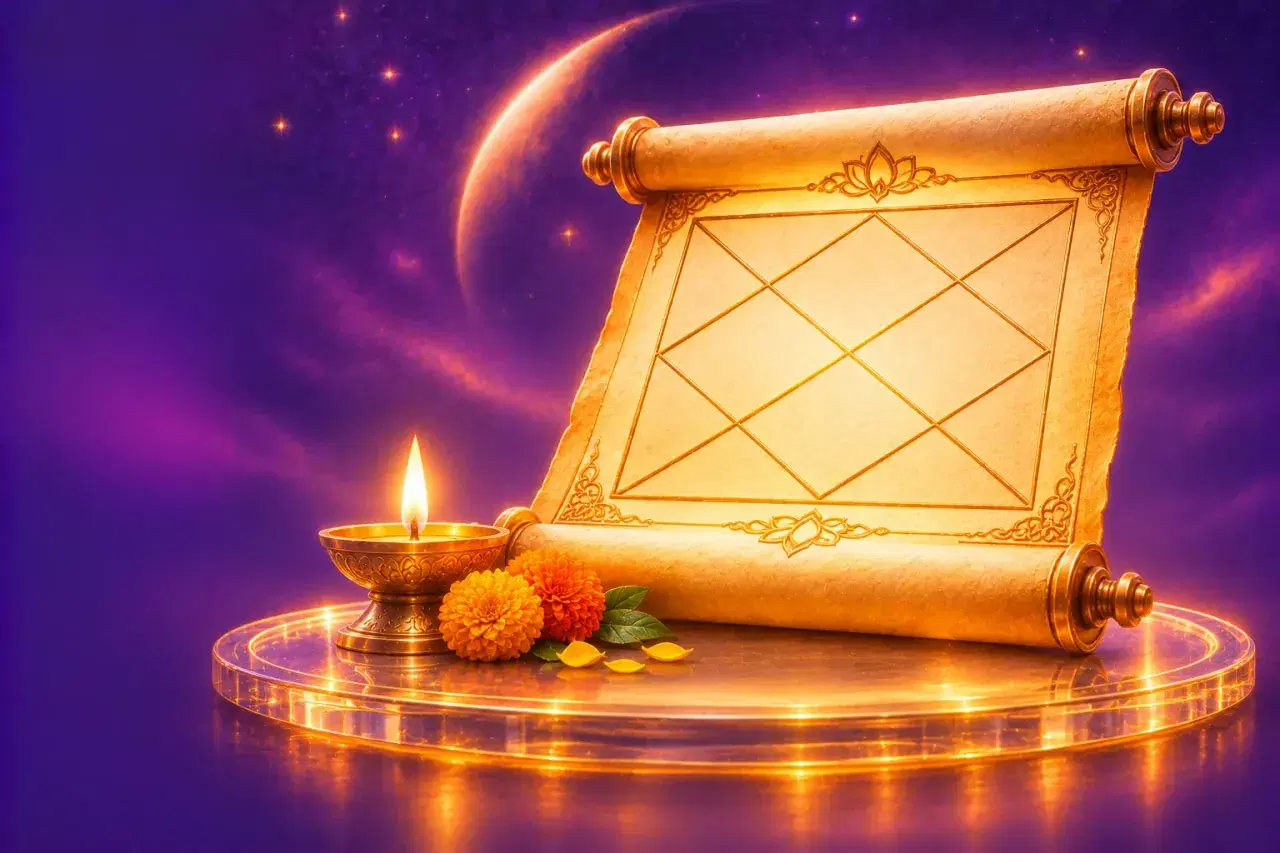
In many Indian families, a child's Janam Kundli is made within days of birth, often by the family priest, and kept for life. It is consulted for the child's name, for school and career questions, for marriage matching and for important dates. But what exactly is in it? This guide walks through every part of a typical Kundli, so the document makes sense even before you learn to interpret it. When you are ready to read it, continue with how to read a Kundli.
The meaning of the words
- Janam / Janma means birth.
- Kundli / Kundali comes from a word meaning circle or coil: the circle of the zodiac.
- Janampatri / Janmapatrika means "birth document".
In English it is called a birth chart, natal chart or horoscope. Strictly, "horoscope" originally meant the rising sign (the Lagna), but in everyday speech all of these words mean the same thing.
What you need to make one
| Detail | Why it matters |
|---|---|
| Date of birth | Sets the positions of all the planets |
| Exact time of birth | Sets the Lagna and houses, which change about every two hours; also refines the Moon's nakshatra and dasha dates |
| Place of birth | Gives latitude, longitude and the time zone (including historical offsets) |
With these, the software (or an astrologer with tables) calculates the sidereal positions of the planets using an ayanamsha, usually Lahiri, and draws the chart. Kundli Naksha's method is documented on the About page.
The sections of a typical Kundli
1. Birth details and Panchang
The first page usually repeats your name, date, time and place, and gives the Panchang of your birth moment: the weekday (vara), lunar day (tithi), nakshatra, yoga and karana, plus sunrise and sunset. Older Kundlis also give the Vikram Samvat and Shaka year and the ayanamsha used.
2. The Lagna chart (D1)
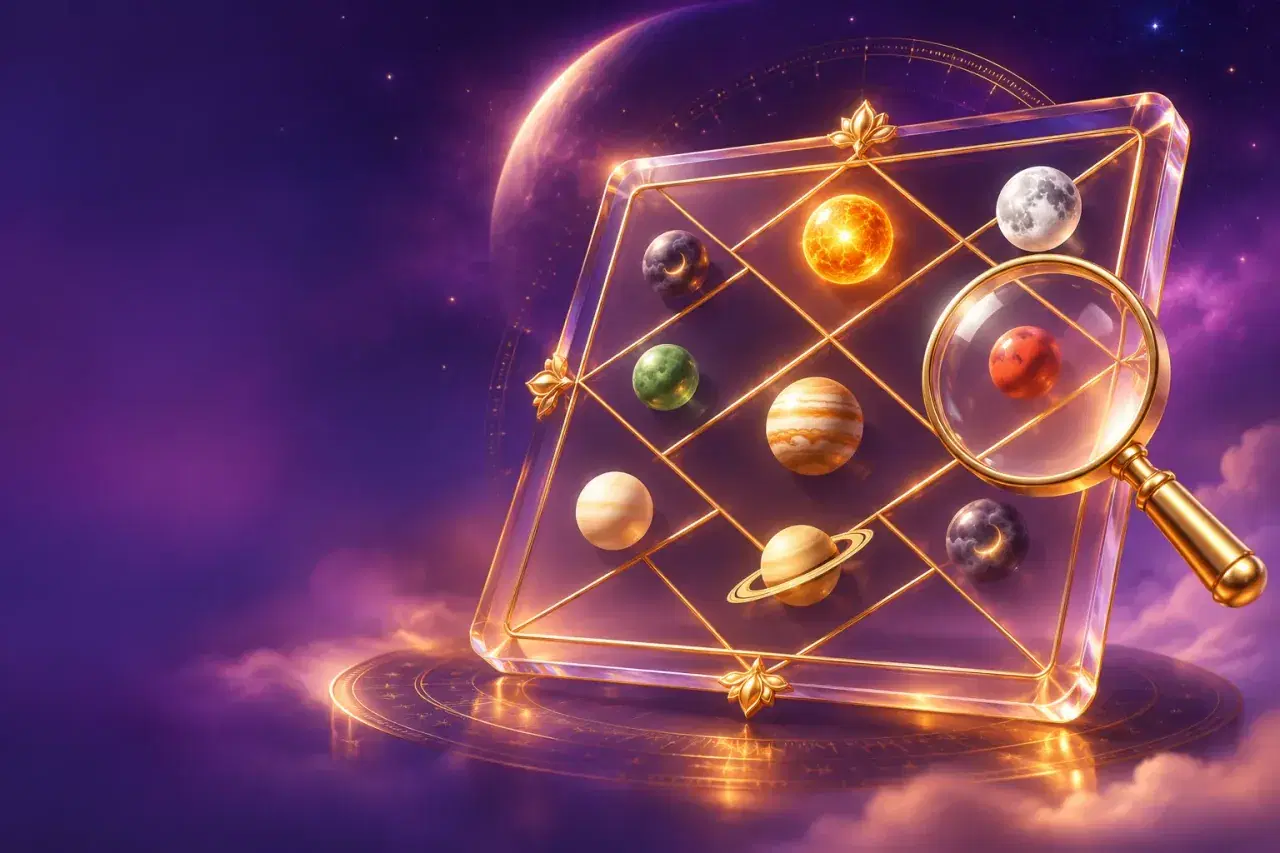
The main chart: twelve houses, the sign in each, and the planets in them. It is drawn in a North Indian (diamond) or South Indian (square) style. The Lagna, the sign rising in the east at your birth, is the 1st house. See Lagna vs Rashi for why it matters so much.
3. The Moon chart (Chandra Kundli)
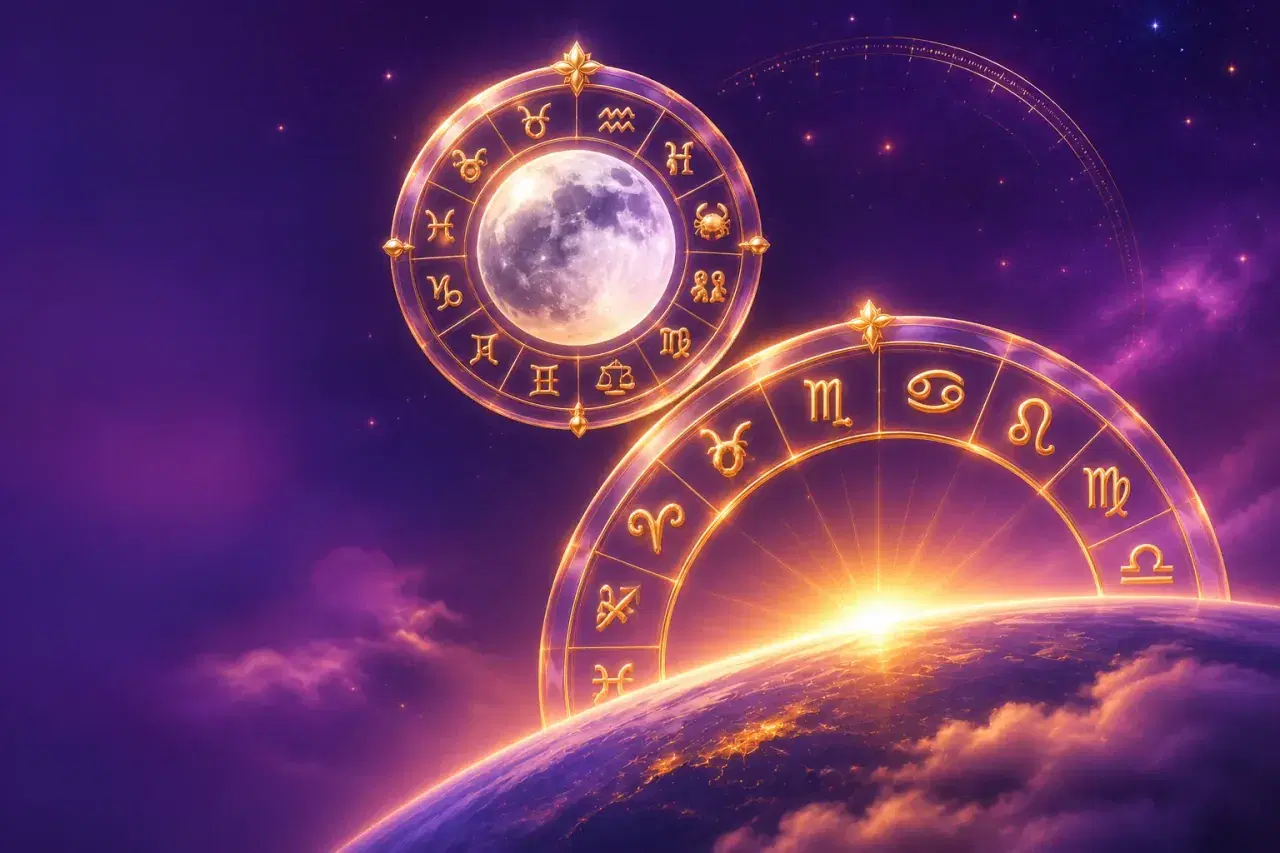
The same planets, redrawn with the Moon's sign as the 1st house. Astrologers read important themes from both charts.
4. The planet table
A table of each graha with its sign, degree, nakshatra and pada, house, and often whether it is retrograde, combust, exalted or debilitated. This is the raw data behind the charts.
5. The avakhada chakra
A summary box of the details used in matching, naming and muhurta, all derived from the Moon. For a person born on 15 August 1990 at 6:30 am in Delhi, it would include:
| Item | Value |
|---|---|
| Rashi (Moon sign) | Vrishabha (Taurus) |
| Rashi lord | Venus |
| Nakshatra and pada | Rohini, pada 2 |
| Nakshatra lord | Moon |
| Namakshar (name syllable) | Va |
| Gana | Manushya |
| Yoni | Serpent |
| Nadi | Antya |
| Varna | Vaishya |
| Vashya | Chatushpada (quadruped) |
These are exactly the factors compared in 36 Guna Milan.
6. Divisional charts (vargas)
Most Kundlis include at least the Navamsa (D9), used for marriage and the strength of planets, and often the Dashamsha (D10) for career and others such as the D2, D3, D7 and D12. Each divides the signs into finer parts and needs an accurate birth time.
7. The dasha table
The Vimshottari dasha timeline: the Mahadasha running at birth (and the balance remaining), then every Mahadasha and Antardasha with dates. This turns the chart into a timeline. Read Vimshottari dasha explained.
8. Doshas and yogas
Many Kundlis list Mangal dosha, Kaal Sarp and Sade Sati status, and notable yogas such as Gajakesari or Raj yogas. Good software explains the rule behind each one and the commonly cited cancellations; Kundli Naksha always shows both.
9. Ashtakavarga and strength tables (detailed Kundlis)
Detailed reports include Ashtakavarga points and Shadbala (planetary strength), used by astrologers for finer judgements about houses and transits.
What a Kundli is used for
| Use | What is looked at |
|---|---|
| Understanding a person | Lagna, Moon, house lords, strong and weak planets |
| Timing | Dashas and transits (gochar) |
| Naming a baby | The Moon's nakshatra pada (namakshar). See baby names by nakshatra |
| Marriage matching | Moon sign and nakshatra (Guna Milan), Mangal dosha, 7th house |
| Muhurat | Your Moon sign and nakshatra checked against the day's Panchang |
| Career, education, health questions | The relevant houses, their lords and divisional charts |
Kundli, horoscope and rashifal: what's the difference?
- A Kundli is your personal birth chart, unique to your date, time and place.
- Rashifal is a general forecast for everyone with the same Moon sign, based on current transits. It is far less personal. See today's rashifal.
- Horoscope can mean either, depending on who is speaking.
Does a Kundli ever change?
The birth chart itself never changes. What changes is which dasha is running and where the planets are transiting relative to it, which is why astrologers read the same Kundli differently at different ages.