Ekadashi is the most widely kept fast in the Hindu calendar. It comes twice a month, on the eleventh day (ekadashi) of the waxing and the waning Moon, and is dedicated to Lord Vishnu. Rules differ a little between families and sampradayas, but the core is shared. This guide gives you a clear, practical checklist.
What Ekadashi is
The Hindu lunar month has two fortnights (pakshas): the bright half (Shukla paksha) as the Moon grows, and the dark half (Krishna paksha) as it wanes. The 11th lunar day (tithi) of each is an Ekadashi, so there are 24 Ekadashis in a normal year and 26 in a year with an extra (adhika) month. Each has its own name and story, from Putrada to Nirjala to Dev Uthani. You can see every date and parana time on the Ekadashi 2026 page.
Types of Ekadashi fast
Choose the level that suits your health and tradition. All are considered valid.
| Type | What it means |
|---|---|
| Nirjala | No food and no water from sunrise to the next sunrise. Traditionally kept mainly on Nirjala Ekadashi (Jyeshtha Shukla). |
| Jalahar | Water only. |
| Ksheerbhoji | Milk and milk products only. |
| Phalahar | Fruits, milk and permitted fasting foods. The most common form. |
| Ekabhukta | One simple meal of permitted foods in the day. |
The three days of the fast
Dashami (the day before)
Eat a light, sattvic meal, ideally only once, and avoid rice in the evening. Many people also avoid onion and garlic from Dashami.
Ekadashi (the fast day)
Wake early, bathe, and begin the fast with a resolve (sankalpa) before Vishnu. Spend the day in prayer, reading or chanting, and keep to the food rules below. Staying awake at night in kirtan or japa (jagaran) is a traditional practice on major Ekadashis.
Dvadashi (the next day)
Break the fast (parana) in the morning within the parana window listed in the Panchang. Traditionally you first offer food to Vishnu and, if possible, to a Brahmin, a guest or someone in need.
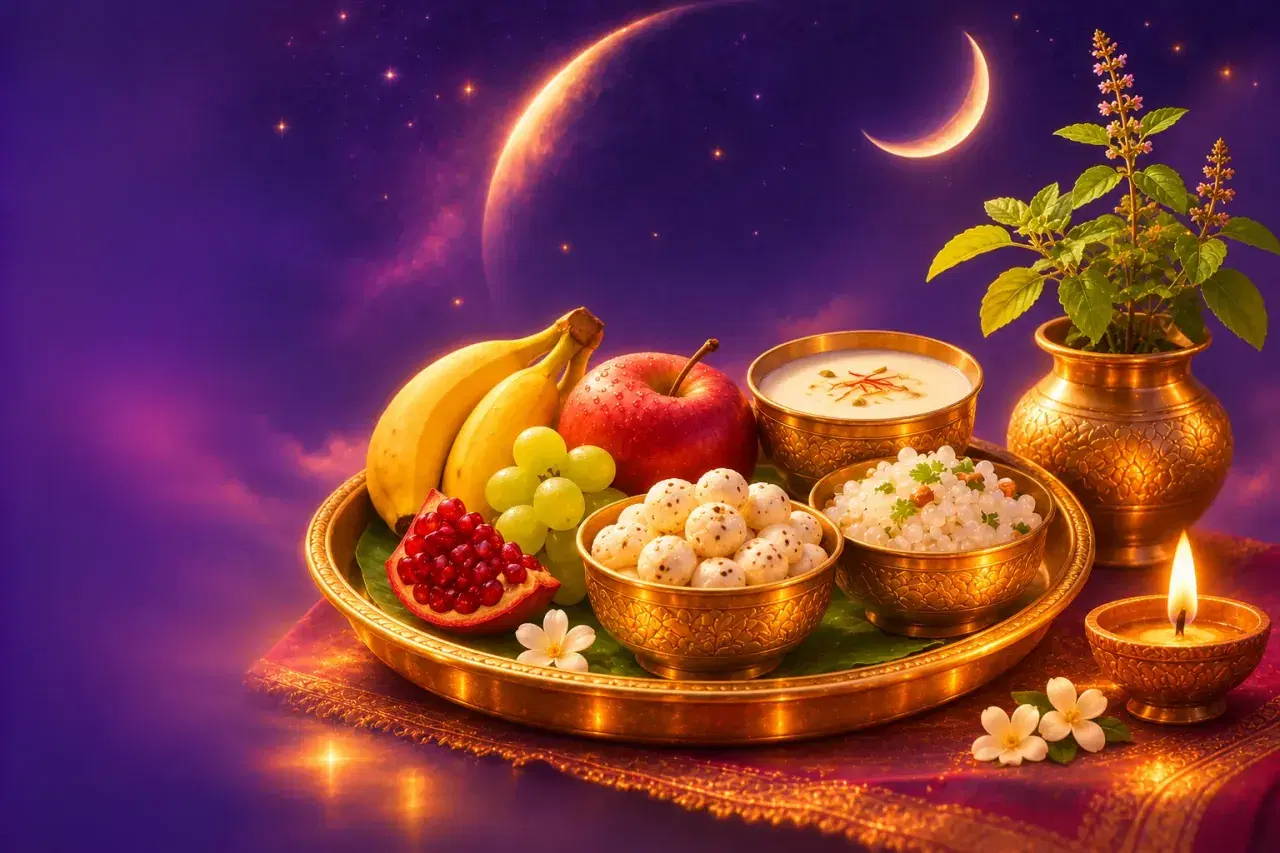
Foods commonly allowed
| Category | Examples |
|---|---|
| Fruits | All fresh fruits: banana, apple, papaya, pomegranate, coconut |
| Dairy | Milk, curd, buttermilk, paneer, ghee, makhana kheer |
| Nuts and seeds | Almonds, cashews, walnuts, peanuts, makhana (fox nuts) |
| Starches | Sabudana (tapioca pearls), potato, sweet potato, arbi (taro), raw banana, pumpkin |
| Fasting flours | Singhara (water chestnut), kuttu (buckwheat), rajgira (amaranth) |
| Others | Samak rice (barnyard millet) in many families, rock salt (sendha namak), black pepper, cumin, green chilli, ginger, sugar, jaggery |
Foods traditionally avoided
| Avoid | Why tradition gives |
|---|---|
| Rice and all grains (wheat, maize, barley, millets used as grains) | The central rule of Ekadashi; puranic stories describe grains as unfit on this day |
| Pulses and legumes (dal, chickpeas, rajma, soy) | Treated like grains |
| Onion and garlic | Considered tamasic |
| Meat, fish and eggs | Not eaten on any vrat day |
| Alcohol and tobacco | Not consistent with a vrat |
| Common (sea) salt | Many families use only rock salt |
| Spices such as turmeric, asafoetida, mustard seeds | Avoided in some traditions, used in others |
Families differ on details such as samak rice, tomatoes, certain spices and whether peanuts are allowed. When in doubt, follow your elders or your temple tradition.
Parana: how and when to break the fast
Parana means "completing" the vrat, and the timing matters in tradition:
- Break the fast on Dvadashi, after sunrise, within the parana window in your Panchang.
- Avoid Hari Vasara, the first quarter of the Dvadashi tithi. If Dvadashi begins at night, Hari Vasara may already have passed by sunrise.
- Break it before Dvadashi ends. If Dvadashi ends early in the morning, parana must be done before that.
- Avoid the midday period if you can; morning is preferred.
- Start gently: water or a fruit, then a simple meal. Many families break the fast with a little rice, since the grain fast is now complete.
Because tithis start and end at different times in different cities, parana times change with location. Kundli Naksha's Ekadashi page and Panchang calculate them for your city.
Smarta and Vaishnava dates
Sometimes two consecutive days are listed as Ekadashi. This happens because traditions use different rules about Dashami overlapping the start of the day. The Smarta date (followed by most households) and the Vaishnava date (followed by ISKCON and many Vaishnava sampradayas) may then differ by one day. Follow the date your family or temple follows.
Who should not fast strictly
Tradition itself exempts people for whom fasting could cause harm. A lighter fast, or simply avoiding grains while eating normally otherwise, is considered acceptable for:
- children and the elderly;
- pregnant or breastfeeding women;
- anyone who is unwell or recovering;
- people with diabetes, low blood pressure or other conditions, or on regular medication.
Please consult your doctor before a nirjala or water-only fast. Devotion does not require putting your health at risk.
Simple Ekadashi meal ideas
- Sabudana khichdi with peanuts and potato
- Kuttu or singhara ki puri with aloo sabzi (rock salt)
- Samak rice khichdi (if your family allows it)
- Makhana kheer or roasted makhana
- Fruit chaat with rock salt and pepper
- Rajgira paratha with curd