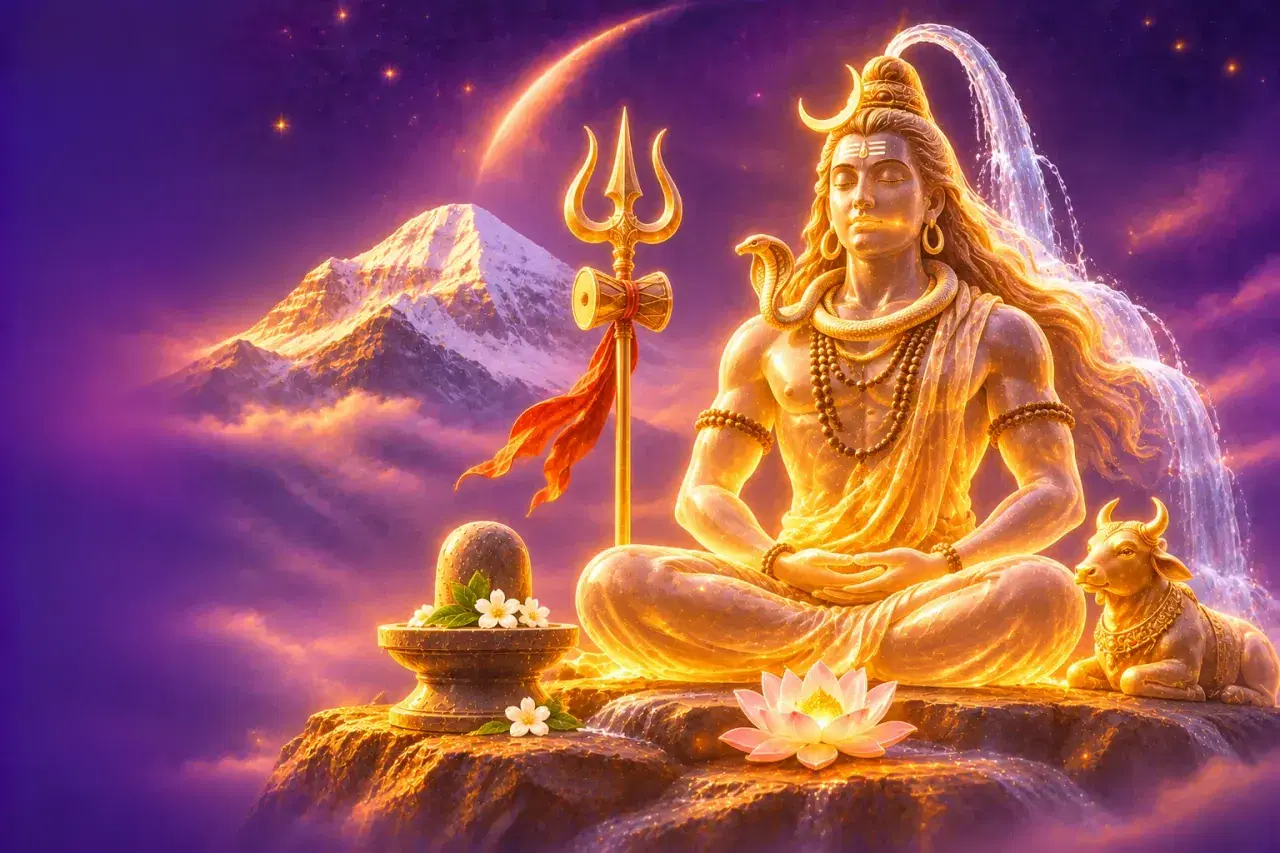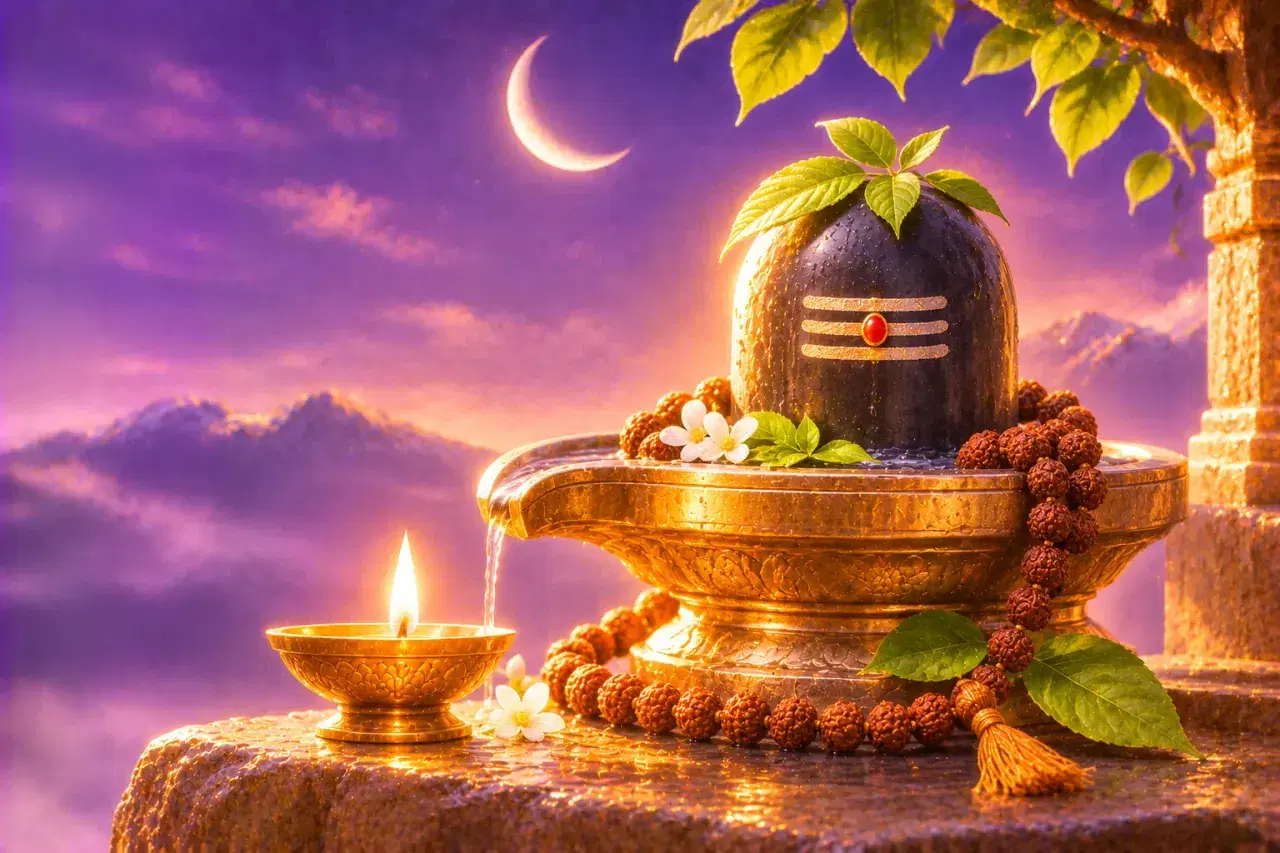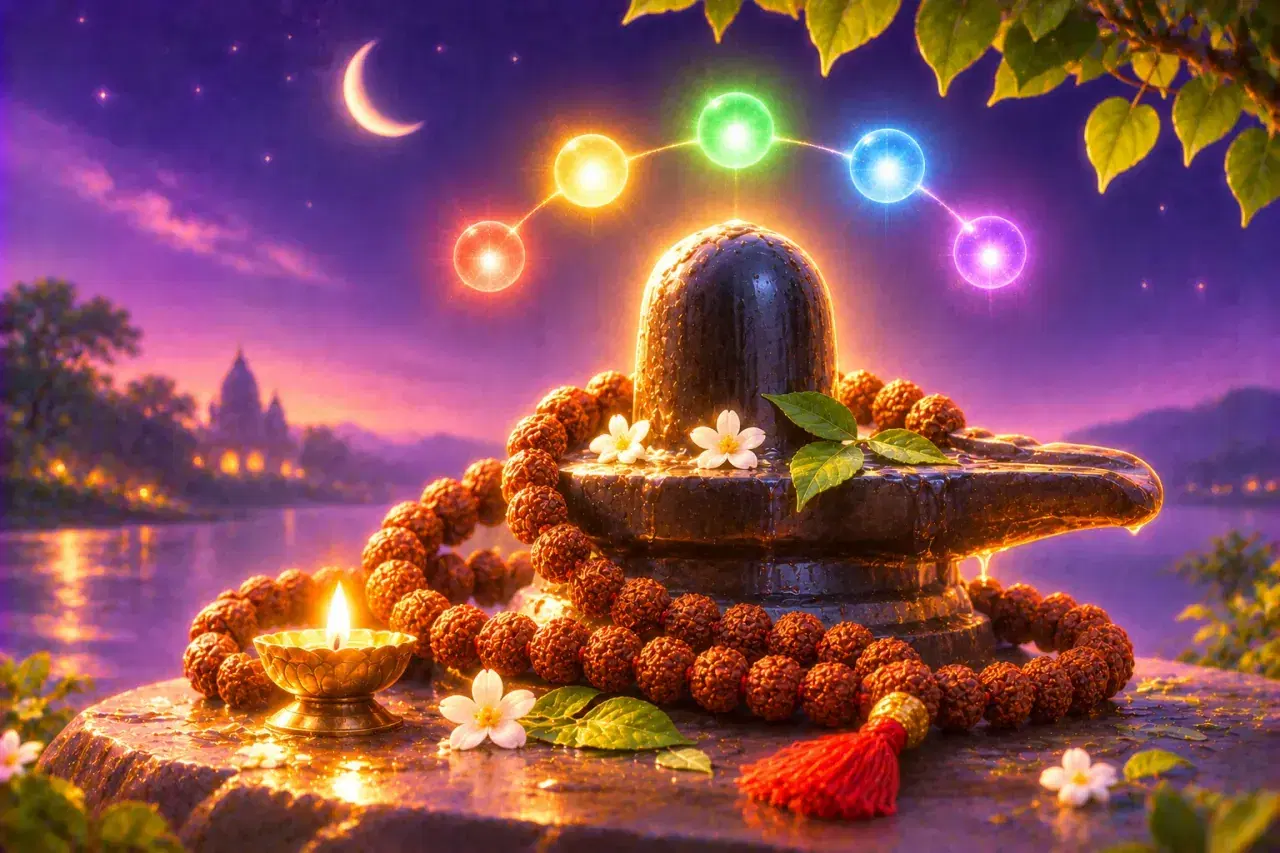
If there is one mantra heard in every Shiva temple from Kashi to Kanyakumari, it is Om Namah Shivaya. Short enough for a child to learn and deep enough for a lifetime of practice, it is the central mantra of Shaiva devotion. Here is what it means and how it is chanted.
The mantra
Devanagari: ॐ नमः शिवाय
Transliteration (IAST): oṃ namaḥ śivāya
Pronunciation: Om Na-mah Shi-vaa-ya: the "a" in Shivaaya is long.
Word-by-word meaning
| Word | Meaning |
|---|---|
| ॐ (Om) | The sacred syllable, the primordial sound |
| नमः (namaḥ) | Salutation, bowing; literally "not mine": an offering of the ego |
| शिवाय (śivāya) | To Shiva; shiva means "the auspicious", "the benevolent", "the kind" |
In plain words: "Om, I bow to Shiva, the auspicious one."
Because namaḥ is sometimes read as na mama, "not mine", teachers often explain the mantra as surrendering the sense of "I and mine" to the divine. Since shiva itself means "auspicious", it can also be understood as bowing to all that is good and peaceful.
Where it comes from
The phrase appears in the Shri Rudram (Rudradhyaya), a hymn to Rudra in the Krishna Yajurveda (Taittiriya Samhita 4.5), in the line namaḥ śivāya ca śivatarāya ca: "salutations to the auspicious one, and to the most auspicious". The mantra sits at the centre of this hymn, which is why it is so revered.
Later texts celebrate it further: the Shiva Purana praises the Panchakshari as the essence of the Vedas, and the Shiva Panchakshara Stotram, traditionally attributed to Adi Shankaracharya, devotes one verse to each of its five syllables.
The five syllables
Without Om, the mantra has exactly five syllables, giving it the name Panchakshari (pancha, five + akshara, syllable). Shaiva traditions, especially in South India, associate them with the five elements:
| Syllable | Element (in many Shaiva traditions) |
|---|---|
| Na (न) | Earth |
| Ma (म) | Water |
| Shi (शि) | Fire |
| Vā (वा) | Air |
| Ya (य) | Space (ether) |
Chanting all five is understood as honouring Shiva as present in the whole of creation. The Shaiva Siddhanta tradition also teaches a subtler order, Shivaya Namah, and explains each syllable's deeper meaning; this is part of a long philosophical tradition rather than a single fixed rule.
How it is traditionally chanted
- Anyone may chant it. Unlike some Vedic mantras that traditionally required initiation, Om Namah Shivaya is chanted freely by devotees everywhere.
- When: at any time, and especially on Mondays, at Pradosh (dusk on the 13th lunar day), in the month of Shravan and through the night of Maha Shivaratri. Check dates in the Panchang or the Maha Shivaratri page.
- How many times: 11, 21 or 108 times on a rudraksha mala is common; some practitioners chant it continuously as a simple meditation.
- Ways to chant: aloud (vachika), softly (upamshu) or silently in the mind (manasika); tradition considers silent repetition the most powerful.
- With worship: many people offer water or bel leaves to a Shiva lingam while chanting.
A simple practice
- Sit comfortably with the spine upright, facing east or north.
- Take a few slow breaths.
- Chant Om Namah Shivaya steadily, letting each repetition flow into the next, moving one bead per repetition.
- Keep the meaning in mind: bowing, letting go, resting in what is good.
- Sit quietly for a minute afterwards.
Om Namah Shivaya and other Shiva mantras
| Mantra | Character |
|---|---|
| Om Namah Shivaya | Devotion and surrender; for everyone, any time |
| Mahamrityunjaya mantra | A Vedic prayer for protection and freedom from fear. See our Mahamrityunjaya guide |
| Shiva Gayatri (Om Tatpurushaya Vidmahe…) | A meditation on Shiva in Gayatri form; compare the Gayatri mantra |
For the meaning of Shiva's forms and symbols, read our guide to Lord Shiva.
What people say it brings
Devotees describe the mantra as calming, centring and protective, and many use it as a daily anchor. Its value is spiritual and personal; it is not a substitute for medical or psychological care when those are needed.