Every Ekadashi has its own story, but Utpanna Ekadashi tells the story of Ekadashi herself: how the fast came to exist. That is why many teachers recommend starting the practice of keeping Ekadashi on this day. Here is the katha, what it means and how the day is observed.
When is Utpanna Ekadashi 2026?
Friday 4 December 2026, by the sunrise tithi for Delhi, with parana (breaking the fast) on the morning of 5 December. Times differ by city; see the Ekadashi 2026 page.
Which month is it in?
Indian calendars count months in two ways:
| Calendar | Name of this Ekadashi's month |
|---|---|
| Purnimanta (months end on the full moon; most of North India) | Margashirsha Krishna Ekadashi |
| Amanta (months end on the new moon; Gujarat, Maharashtra, South India) | Kartik Krishna Ekadashi |
It is the same day; only the month name differs. In both, it is the first Ekadashi after Kartik Purnima.
The Utpanna Ekadashi vrat katha
The story is told in the Ekadashi mahatmya traditions associated with the Padma and Bhavishya Puranas. In the katha, Lord Krishna tells it to Yudhishthira.
In the Satya Yuga there lived a fearsome demon named Mura (Murasura), son of Nadijangha. He grew so powerful that he drove Indra and the gods out of heaven. The gods went first to Shiva, who sent them to Vishnu, the protector of the worlds.
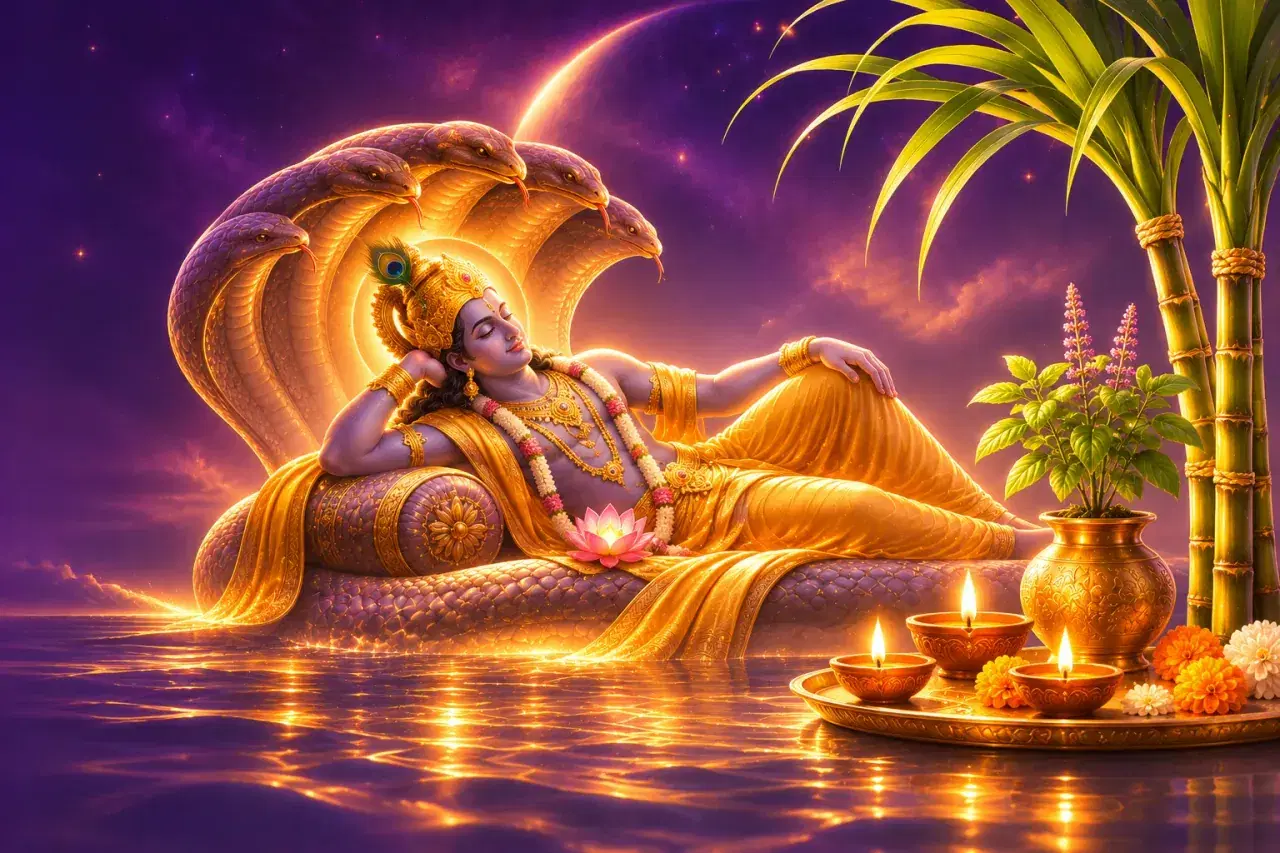
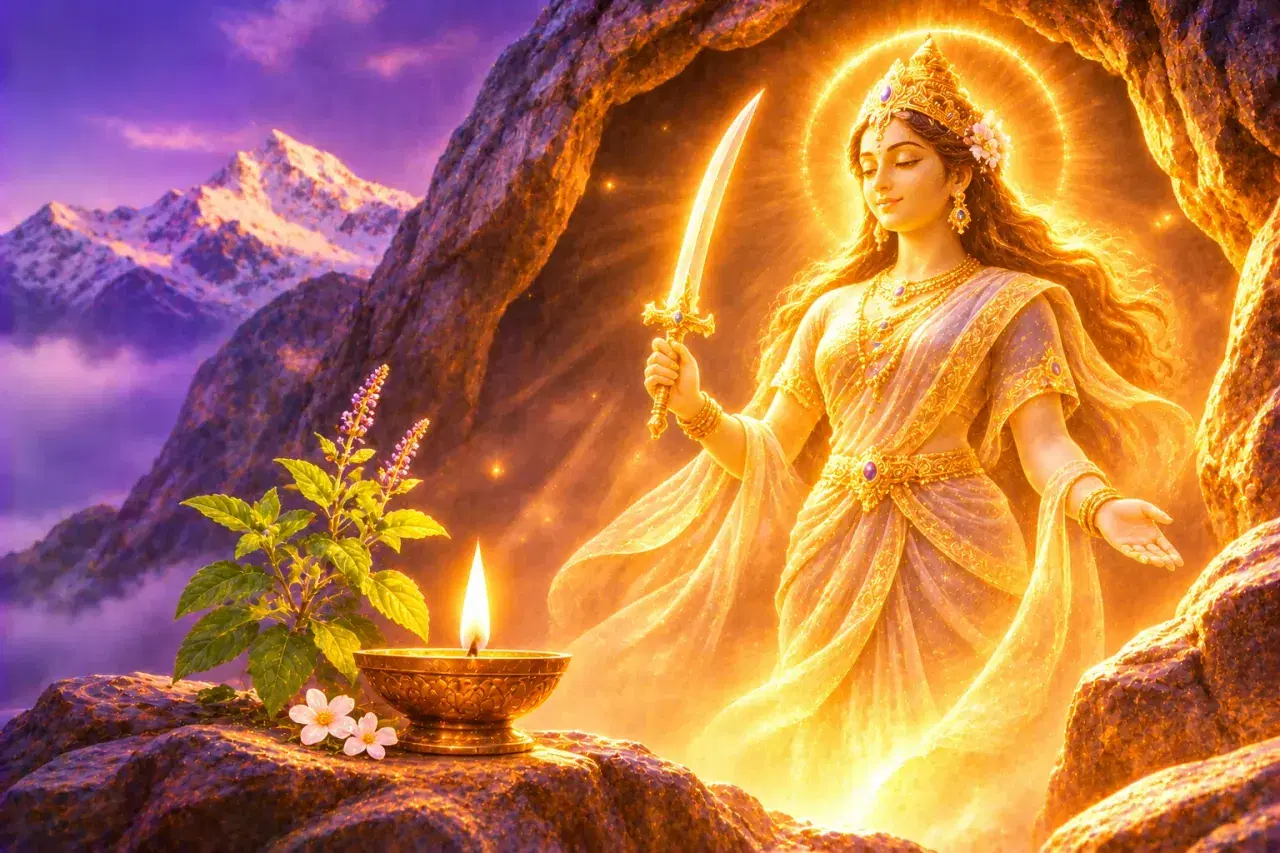
Vishnu fought Mura and his armies for what the story calls a thousand celestial years. He destroyed countless demons, but Mura himself would not fall. Weary, Vishnu withdrew to rest in a cave called Himavati near Badrikashram, in the Himalayas.
Mura followed him there, intending to kill the Lord as he slept. But as the demon raised his weapon, a radiant young woman shining with divine weapons emerged from Vishnu's body. She challenged Mura, fought him, and with a single blow (in some tellings, with just the sound "hum") reduced him to ashes.
When Vishnu awoke and saw the slain demon, he asked who had saved him. The goddess replied that she had been born from his own power to protect him. Delighted, Vishnu said:
From that day, Ekadashi became the most beloved fast of Vishnu's devotees. Because this is the day she appeared, it is called Utpanna ("born", "arisen") Ekadashi.
What the story means
Devotees often read the story symbolically:
- Mura stands for the inner obstacles (restlessness, laziness, sin) that attack us when our awareness "sleeps".
- Ekadashi is the power of disciplined devotion that arises from the divine within us and overcomes them.
- The fast is a day of turning the senses inward, so that this power can awaken.
How Utpanna Ekadashi is observed
The rules are those of every Ekadashi; our guide to Ekadashi vrat rules covers them in full. In brief:
- Dashami (3 December): a simple, light meal, no grains at night.
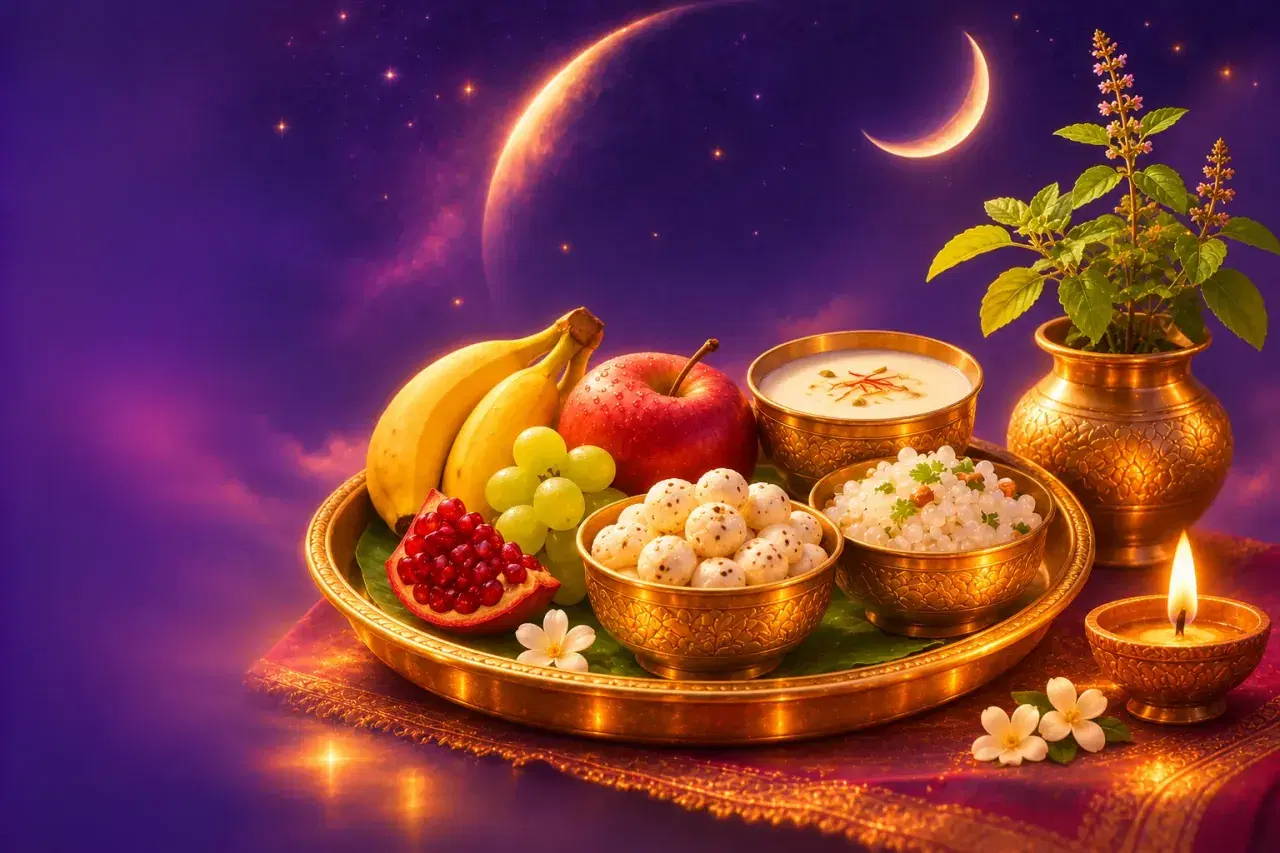
- Ekadashi (4 December): wake before sunrise, bathe, and take a sankalpa (resolve) to fast. Worship Vishnu with tulsi leaves, flowers, incense, a ghee lamp and fruits. Read or listen to this katha. Avoid all grains and pulses; eat fruits, milk and fasting foods, or keep a stricter fast if your health allows.
- Night: many devotees stay awake in kirtan or japa.
- Dvadashi (5 December): break the fast in the parana window, after offering food to Vishnu and, if possible, to someone in need.
Beginning the Ekadashi practice
Traditionally, a person who wants to keep Ekadashi regularly takes the vow on Utpanna Ekadashi and then fasts on both Ekadashis of every month. If you are starting, begin with a light phalahar fast and build up. Please speak to your doctor first if you have any health condition.
Mantras for the day
- Om Namo Bhagavate Vasudevaya, the twelve-syllable Vishnu mantra
- The Vishnu Sahasranama, the thousand names of Vishnu
- Hare Krishna Hare Krishna, Krishna Krishna Hare Hare, Hare Rama Hare Rama, Rama Rama Hare Hare, in many Vaishnava homes