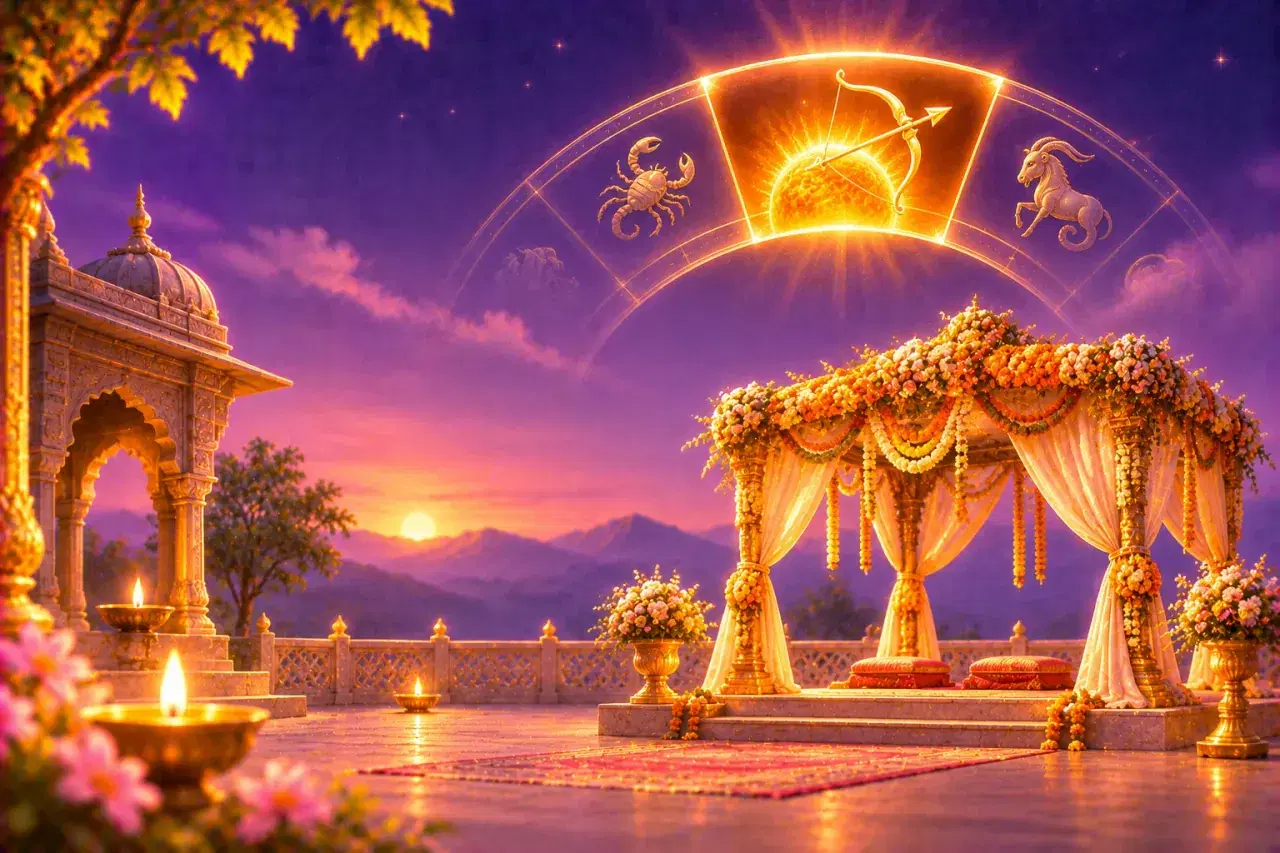
The wedding season that begins after Dev Uthani Ekadashi pauses again in mid-December. For about a month, many North Indian families do not hold weddings or move into new homes. This pause is Kharmas. Here are the exact dates for 2026–27, why it exists, and what tradition recommends doing instead.
Kharmas 2026–27 dates
| Event | Date and time (IST) |
|---|---|
| Kharmas begins: Sun enters Sagittarius (Dhanu Sankranti) | Wednesday 16 December 2026, 10:25 am |
| Kharmas ends: Sun enters Capricorn (Makar Sankranti) | Thursday 14 January 2027, 9:10 pm |
| Makar Sankranti observed | Friday 15 January 2027 |
Times are calculated by Kundli Naksha's engine with the sidereal zodiac and Lahiri ayanamsha. Because the Sun enters Capricorn in the evening of 14 January, Makar Sankranti's punya kaal (and the first auspicious days for weddings) fall from 15 January 2027. Our muhurat finder lists the engine-scored wedding dates.
The second Kharmas of the year
Kharmas happens twice a year, whenever the Sun is in one of Jupiter's two signs:
| Sun in | Approximate period |
|---|---|
| Sagittarius (Dhanu) | mid-December to mid-January |
| Pisces (Meena) | mid-March to mid-April |
Why is it called Kharmas?
Khar means donkey. A popular story explains the name: the Sun god Surya rides a chariot drawn by seven horses that never rest. During this month the horses grew so tired and thirsty that Surya, pitying them, stopped by a pond and yoked two donkeys (khar) to his chariot so the horses could drink and rest. The donkeys pulled slowly, the Sun's brightness seemed to weaken, and the month became known as Kharmas. When the horses were refreshed, the Sun's full glory returned at Makar Sankranti.
The more technical explanation in Jyotish is that the Sun in Jupiter's signs is held to weaken Jupiter's role as the significator of auspicious ceremonies, especially marriage, so major samskaras are postponed.
What is avoided during Kharmas
In North and Central Indian tradition:
- weddings (vivah) and engagements;
- griha pravesh (moving into a new home) and starting construction;
- mundan (a child's first haircut) and janeu (sacred thread) ceremonies;
- buying a new home, vehicle or major property, and starting a new business (in many families).
What is good to do
The month is not "inauspicious" for everything. It is considered especially good for:
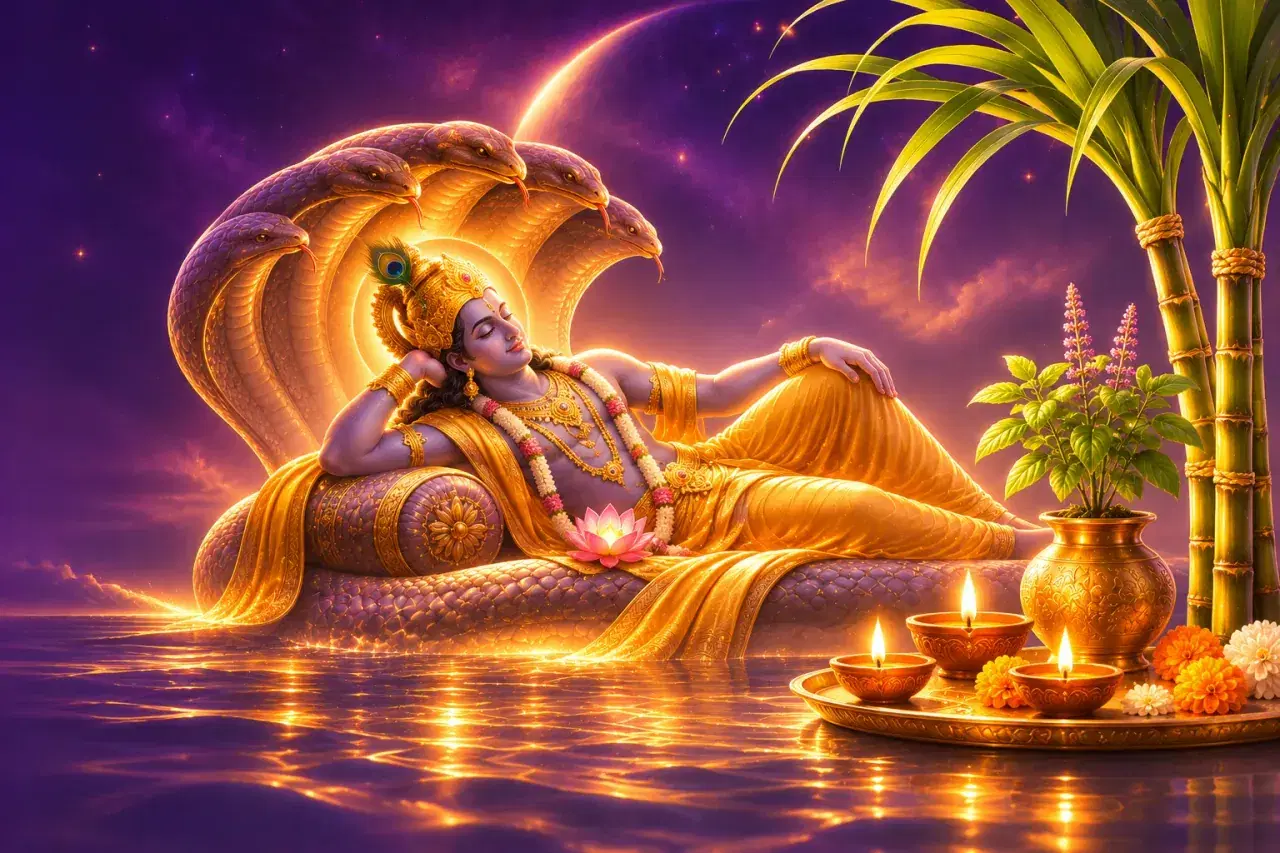
- worship: of Vishnu and of the Sun (Surya), with offerings of water at sunrise;
- charity: giving food, blankets, sesame and jaggery as winter deepens;
- scripture: reading the Bhagavad Gita, the Ramayana or the Bhagavata;
- pilgrimage and holy dips;
- fasting, including Ekadashi; Mokshada Ekadashi and Gita Jayanti often fall around the start of Kharmas.
Dhanurmasa in South India
In Tamil Nadu and other South Indian regions, the same solar month, Margazhi (Dhanurmasa), is one of the holiest of the year. Women draw kolams at dawn, temples hold early-morning worship, and Andal's Tiruppavai is sung each morning. Vaikuntha Ekadashi usually falls in it. Here too, weddings are traditionally avoided, but devotion is at its peak.
The astronomy behind the dates
Kharmas follows the sidereal zodiac. That is why it begins around 16 December, not on 21–22 December when the Sun reaches the winter solstice and enters tropical Capricorn. Our guide to the sidereal vs tropical zodiac explains the 24° gap, and Vrishchika Sankranti covers the Sankranti before it.