Of all the weddings in Indian storytelling, none is celebrated as lovingly as the marriage of Rama and Sita. Every year, on Vivah Panchami, temples in Ayodhya and the city of Janakpur in Nepal, Sita's birthplace, re-enact it as if it were happening for the first time. Here is the story and how the day is kept.
When is Vivah Panchami 2026?
Monday 14 December 2026, the Shukla Panchami of Margashirsha, by the sunrise tithi for Delhi. See the Vivah Panchami page for timings in your city.
The story of the wedding
The story is told in the Bala Kanda of Valmiki's Ramayana and, very beautifully, in Tulsidas's Ramcharitmanas. Different versions differ in detail; this is the familiar outline.
The bow of Shiva
King Janaka of Mithila had found the infant Sita in a furrow of the earth while ploughing a field for a sacrifice, and raised her as his daughter. In his palace he kept a divine bow, Pinaka, once wielded by Shiva, so heavy that it took many men to move it. As a child, the story goes, Sita once moved it with ease while playing. Janaka then vowed that only someone strong enough to lift and string this bow would marry her.
Rama comes to Mithila
The sage Vishvamitra had taken the young princes Rama and Lakshmana of Ayodhya to protect his sacrifices from demons. With the work done, he led them to Mithila, where Janaka was holding Sita's swayamvara. In the Ramcharitmanas, Rama and Sita first glimpse each other in a flower garden (the Pushpa Vatika) the day before, a scene loved by generations.
Breaking the bow
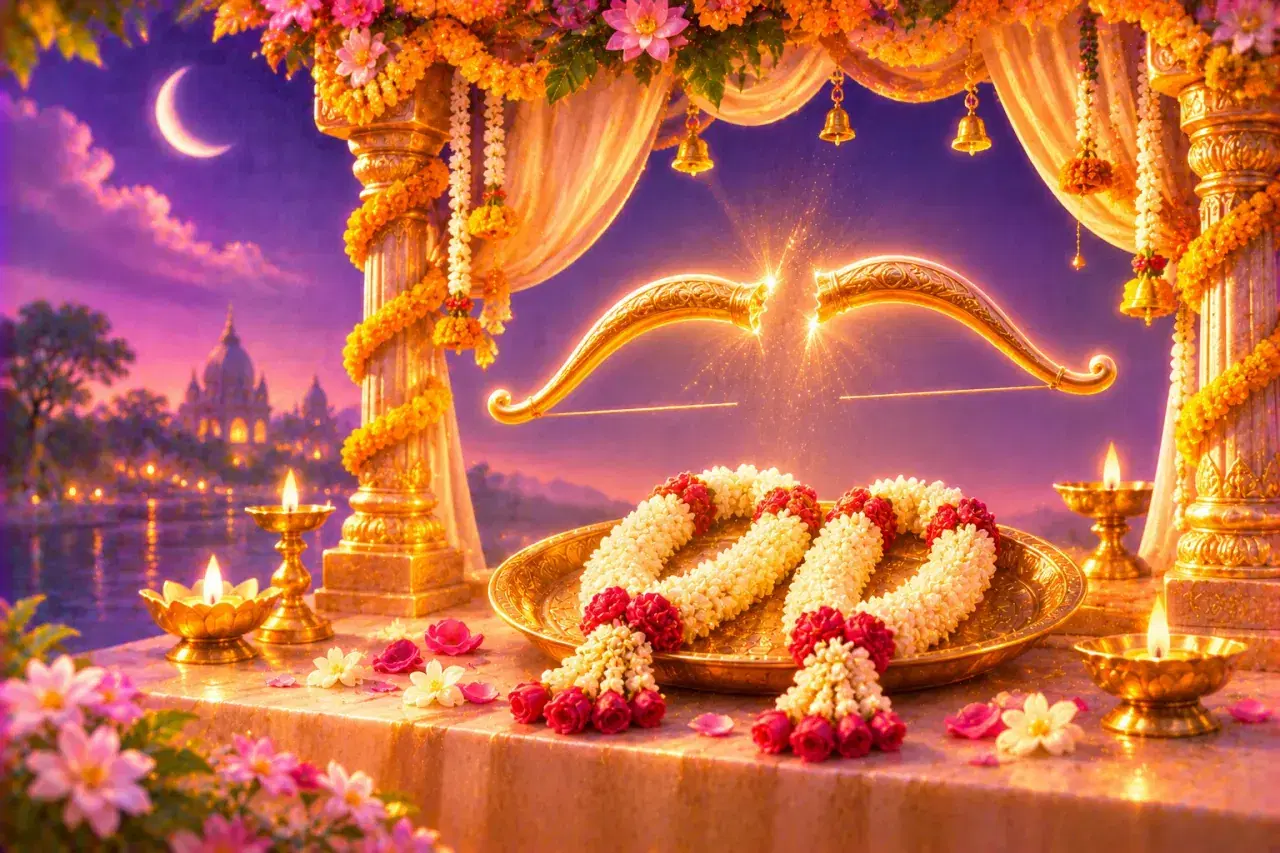
Kings and princes from many lands tried and failed even to move the bow. Janaka despaired, wondering aloud whether the earth had no heroes left. At a sign from Vishvamitra, Rama stepped forward, lifted the bow effortlessly and, as he drew the string, it broke in two with a sound like thunder. Sita came forward and placed the varmala (wedding garland) around his neck.
Parashurama's anger
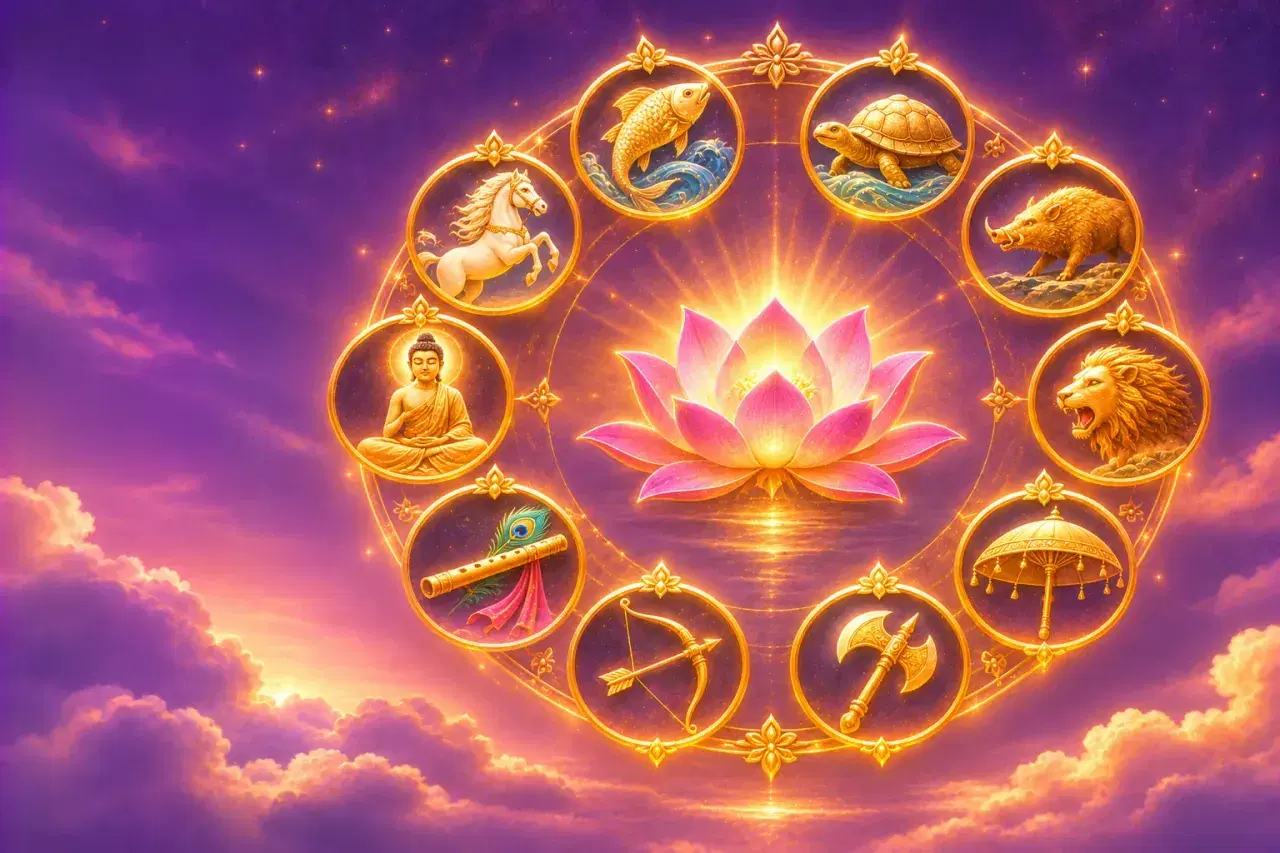
The sound of the breaking bow reached Parashurama, a devotee of Shiva, who arrived in fury. Lakshmana answered him sharply; Rama answered with humility, and finally, when Parashurama handed him Vishnu's own bow, Rama strung it too. Parashurama recognised who Rama was and departed in peace. (Both are avatars of Vishnu: see the Dashavatara.)
Four weddings at Janakpur
Messengers went to Ayodhya, and King Dasharatha came with his court. Four couples were married together: Rama and Sita, Lakshmana and Urmila (Sita's sister), and Bharata and Mandavi and Shatrughna and Shrutakirti (daughters of Janaka's brother Kushadhvaja). The celebrations, the songs of the women of Mithila and the farewells (vidai) of the brides are among the most tender passages in the Ramayana.
How Vivah Panchami is celebrated
- Janakpur (Nepal): the Janaki Mandir hosts a re-enactment over several days: the bow-breaking, the wedding procession from "Ayodhya" and the rites, drawing pilgrims from India and Nepal.
- Ayodhya: temples such as Kanak Bhawan decorate the deities as bride and groom; processions and bhajans fill the streets.
- At home: many families read the Bala Kanda or the wedding chapters of the Ramcharitmanas, worship Rama and Sita, offer flowers and sweets and sing wedding songs.
Why some families avoid weddings on this day
In parts of Mithila, folk tradition says families do not hold weddings on Vivah Panchami itself, because Sita's married life brought great hardship: exile, abduction and separation. Other families consider the day very auspicious. If you are choosing a wedding date, the muhurat finder gives the traditional options.
What the story means
- Rama's humility: the strongest prince is also the most modest, even when faced with Parashurama's anger.
- Sita's strength: she is born of the earth and later shows unbreakable courage; the bow story hints at it from the start.
- Dharma in marriage: the wedding begins one of the great stories of loyalty and duty, which continues in the rest of the Ramayana.